
Shoes are easy to overlook when packing for a move. Most people toss them into garbage bags or stuff them loosely into boxes, only to find scuffed leather, crushed heels, and mismatched pairs at the other end. The truth is, footwear needs just as much care as your glassware or electronics.
At Clean & Careful, we’ve seen what happens when shoes get packed the wrong way. Expensive boots arrive with creased leather. White sneakers come out stained from dirty soles pressed against them. Heels snap off because they weren’t protected. A little extra effort during packing prevents all of this.
This guide walks you through the best way to pack shoes for moving, step by step, so your footwear arrives at your new home in the same condition it left.
Why Properly Packing Shoes Matters
Your shoes take a beating during a move. They get stacked under heavy boxes, jostled around in trucks, and pressed against other items for hours. Without proper protection, the damage adds up fast.
Scuffs and scratches are the most common problem. Leather dress shoes rubbing against each other leave permanent marks. Suede picks up dirt and stains from contact with other items. Delicate materials like satin or patent leather show every scrape.
Shape loss is another issue. Boots collapse without support. Sneakers get crushed under heavier items. High heels bend or break when packed carelessly. Once a shoe loses its shape, it rarely looks the same again.
Dirty soles also cause problems. Mud, grass, and grime transfer to clothing, linens, and other belongings packed nearby. One dirty hiking boot can ruin an entire box of items.
Finally, poor packing leads to chaos during unpacking. Separated pairs, missing shoes, and unlabeled boxes turn a simple task into a frustrating scavenger hunt. Taking time to pack shoes properly saves you time and headaches later.
What You’ll Need to Pack Shoes for Moving
Gather your supplies before you start. Having everything on hand makes the process faster and more efficient.
You’ll need sturdy moving boxes or plastic bins. Medium-sized boxes work best for shoes because they’re easy to carry and don’t get too heavy. Plastic bins offer extra protection for long-distance moves or storage.
Packing paper or clean towels provide cushioning and wrapping material. Avoid newspapers because the ink can transfer onto lighter-colored shoes. White packing paper is the safest choice.
Shoe bags or plastic bags keep pairs together and protect them from dust and scuffs. If you still have the original shoe boxes, even better. They’re designed to protect that specific pair.
Labels and markers help you identify boxes quickly. Write the contents and the room destination on each box so unpacking goes smoothly.
Step 1: Clean and Dry Your Shoes First
Never pack dirty shoes. This is the most common mistake people make, and it causes the most problems.
Start by removing dirt, mud, and debris from the soles. Use a stiff brush or an old toothbrush to scrub away caked-on grime. Wipe down the uppers with a damp cloth to remove dust and surface dirt. For stubborn stains, use a cleaner appropriate for the material.
Let your shoes dry completely before packing. This is key. Moisture trapped inside a box or bag creates the perfect environment for mold and mildew. It also causes odors that spread to other shoes and belongings. If you’ve cleaned your shoes with water, give them at least 24 hours to air dry.
For leather shoes, apply a conditioner after cleaning to prevent cracking during the move. Leather can dry out and become brittle when stored, especially in fluctuating temperatures.
Step 2: Sort Shoes by Type
Before packing, sort your shoes into categories. This makes packing easier and helps you stay organized during unpacking.
Group everyday shoes together. These are the sneakers, flats, and casual shoes you wear most often. You’ll want easy access to these when you arrive at your new home.
Keep dress shoes separate. Heels, oxfords, and formal footwear need extra protection and shouldn’t be packed with heavy boots or dirty athletic shoes.
Boots need their own space because of their size and weight. Tall boots should be packed upright or laid flat with support inside to prevent creasing.
Seasonal shoes like sandals, flip-flops, and winter boots can be packed together and labeled for later unpacking. There’s no rush to access these if you’re moving during the opposite season.
This is also a good time to declutter. If you haven’t worn a pair in over a year, consider donating or selling them. Moving fewer shoes means less packing and lower moving costs.
Step 3: Protect Each Pair Properly
Each pair of shoes needs individual attention. The goal is to prevent scuffing, maintain shape, and keep pairs together.
Wrap each shoe separately in packing paper or a soft cloth. This creates a barrier that prevents shoes from rubbing against each other and causing damage.
Stuff shoes with packing paper, clean socks, or tissue paper to help them hold their shape. This is especially important for leather shoes, boots, and any footwear with a structure that could collapse. Shoe trees work great for dress shoes if you have them.
Different materials need different care. Leather shoes benefit from a light coat of conditioner before packing. Suede should be brushed and wrapped in breathable material rather than plastic. Patent leather needs extra padding because it scratches easily. Canvas and fabric shoes are more forgiving but still benefit from wrapping.
For expensive or delicate shoes, consider wrapping them in bubble wrap for extra cushioning. Just make sure the shoes are clean and dry first.
Step 4: Choose the Right Packing Method
How you pack your shoes depends on the type of move and the number of shoes you have.
Original shoe boxes
If you’ve saved the original boxes, use them. They’re designed to fit and protect that specific pair. Stack the boxes inside a larger moving box and fill any gaps with packing paper to prevent shifting.
Moving boxes
Medium-sized moving boxes work well for most shoes. Line the bottom with packing paper, place heavier shoes on the bottom, and layer lighter shoes on top. Fill gaps with paper or soft items to prevent movement.
Plastic bins
For long-distance moves or temporary storage, plastic bins offer better protection against moisture and crushing. They’re also stackable and reusable after the move.
Suitcases
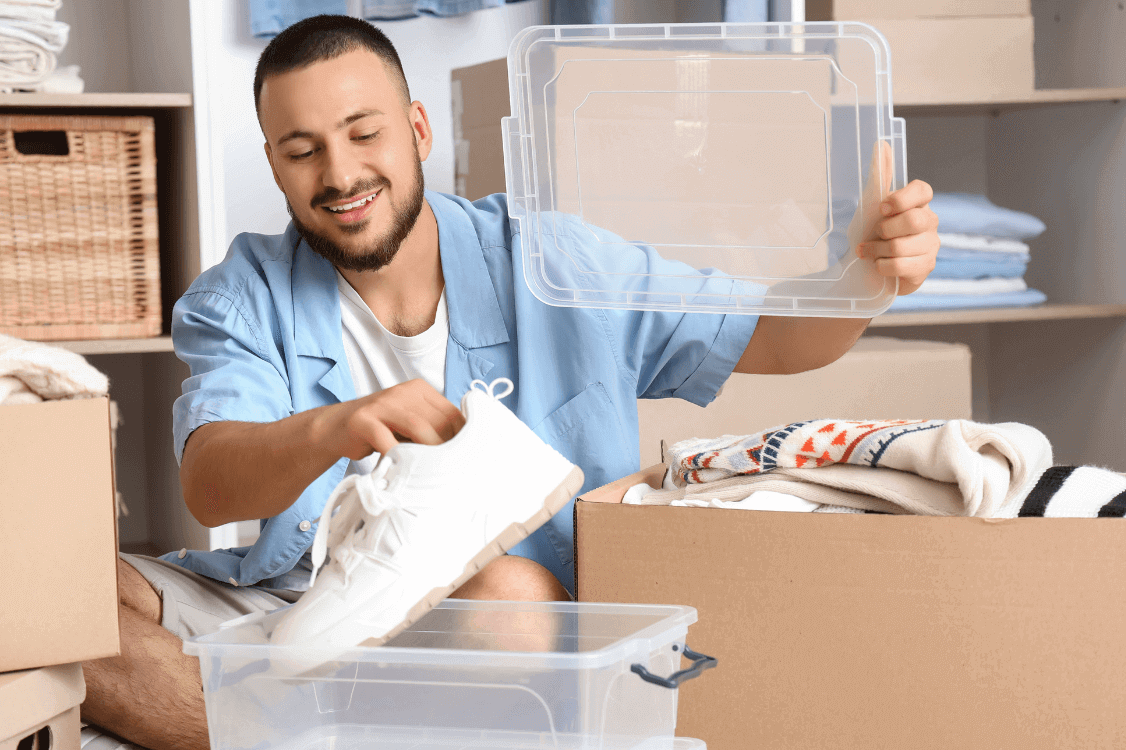
Packing shoes inside suitcases is a smart way to use space efficiently. Place shoes along the bottom or sides of the suitcase, wrapped and protected. This works especially well for sturdy sneakers and casual shoes.
Step 5: Pack Shoes Strategically in Boxes
How you arrange shoes inside a box matters as much as how you wrap them.
Always place heavier shoes on the bottom. Boots, chunky sneakers, and platform shoes go first. This creates a stable base and prevents crushing lighter footwear.
Layer lighter shoes on top. Flats, sandals, and delicate dress shoes should sit above the heavier items, where they won’t get squished.
Fill every gap. Empty space allows shoes to shift and collide during transport. Use packing paper, clean socks, or small soft items to fill holes and keep everything snug.
Don’t overpack. A box that’s too heavy is hard to carry and more likely to break. It also puts excessive pressure on the shoes at the bottom. If the box feels too heavy, remove some pairs and start a new box.
Step 6: Label and Organize Shoe Boxes
Clear labeling makes unpacking much easier. Write “Shoes” on the outside of each box along with a brief description of the contents, such as “Everyday sneakers” or “Dress shoes”.
Note the destination room on each box. This helps movers place boxes in the right location and saves you from carrying heavy boxes around your new home.
Keep frequently worn shoes accessible. Pack a separate bag or small box with the shoes you’ll need right away: a comfortable pair for unpacking day, work shoes if you’re starting immediately, and slipper or house shoes for settling in.
Consider creating a first-night essentials box that includes basic footwear alongside toiletries, chargers, and a change of clothes. Having these items within reach makes the first night in your new home much more comfortable.
Common Shoe Packing Mistakes to Avoid
Even with good intentions, people keep making the same packing mistakes. Here’s what to watch out for:
- Packing dirty or damp shoes – Dirt transfers to other items. Moisture causes mold, mildew, and odors. Always clean and dry shoes completely before packing.
- Mixing shoes with fragile items – Shoes are heavy and can shift during transport. Never pack them in boxes with glassware, electronics, or other breakables.
- Forgetting to label boxes – Unlabeled boxes slow down unpacking and make it hard to find what you need. A few seconds of labeling saves hours of searching.
- Using plastic bags without ventilation – Sealed plastic traps moisture and can damage leather and suede. If you use plastic bags, leave them slightly open or poke small holes for airflow.
- Throwing shoes loose into bags – Garbage bags offer no protection. Shoes rub together, lose shape, and arrive damaged. Always wrap and pack shoes properly.
When to Let Professional Movers Handle Packing.
Packing shoes isn’t complicated, but it does take time. If you’re managing a busy schedule, working until moving day, or dealing with a large home, professional packing services can make a real difference.
Professional movers know how to pack efficiently and protect your belongings. They bring the right materials, use proven techniques, and work quickly without sacrificing care. What might take you an entire weekend can be done in a few hours by an experienced team.
At Clean & Careful, our packing services cover everything from fragile glassware to everyday items like shoes. We use high-quality materials priced below retail costs, and we label everything clearly for organized unpacking at your new home.
Hiring professionals also reduces stress. Moving is already overwhelming. Letting experts handle the packing gives you time to manage other important tasks like updating your address, transferring utilities, and saying goodbye to your neighbors.
Protect Your Footwear and Move with Confidence
Packing shoes properly doesn’t require special skills or expensive equipment. It just takes a little planning and attention to detail. Clean your shoes before packing. Sort them by type. Wrap each pair individually and stuff them to maintain shape. Choose the right packing method for your move. Pack strategically with heavy shoes on the bottom. Label everything clearly.
Follow these steps, and your footwear will arrive at your home ready to wear. If you’d rather leave the packing to the professionals, Clean & Careful is here to help. We offer full-service packing, partial packing, and expert handling for all your belongings. Our experienced team treats your items with the care they deserve.
Contact Us for a Free Moving Quote
Planning a move in Orange County? Let Clean & Careful handle the hard work. Contact us today for a free, no-obligation quote.
Call us –(949) 375-4629
Email us – cleancarefulmoving@gmail.com
We serve all of Orange County, CA, and the surrounding areas. Let us move you safely, efficiently, and stress-free.